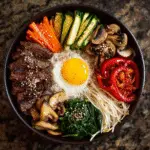
Description
If you’re craving a fast, flavorful, and colorful meal, this Quick Korean Bibimbap is the perfect weeknight fix. Packed with fresh veggies, tender seasoned beef (or your choice of protein), warm rice, and a bold, spicy-sweet gochujang sauce, this bowl delivers a harmony of textures and flavors in every bite. It feels comforting, nourishing, and totally customizable — ideal for busy days when you still want something hearty and homemade. Whether you’re new to Korean-inspired cooking or already obsessed with it, this recipe brings big flavor with minimal effort.
Ingredients
For the Base
-
2 cups cooked short-grain rice (or sushi rice)
-
2 tsp sesame oil (optional, for mixing or crisping rice)
For the Protein
-
1 lb (about 450 g) thinly sliced beef (sirloin, ribeye, or use ground beef)
-
2 tbsp soy sauce
-
1 tbsp sesame oil
-
1 tbsp brown sugar (or honey)
-
3 cloves garlic, minced
-
1 tsp grated ginger (optional)
For the Vegetables (choose a few or all)
-
1 medium zucchini, julienned
-
2 carrots, julienned
-
1 cup spinach (fresh)
-
1 cup bean sprouts
-
8 oz mushrooms (shiitake or button), sliced
-
1 red bell pepper, thinly sliced
For the Egg
-
2–4 eggs (one sunny-side-up per bowl)
For the Bibimbap Sauce
-
3 tbsp gochujang (Korean chili paste)
-
1 tbsp sesame oil
-
1 tbsp rice vinegar (or regular vinegar)
-
1 tsp honey or sugar
-
1 clove garlic, minced
-
1–2 tbsp water (to thin the sauce, as needed)
To Garnish
-
Sesame seeds (toasted)
-
Thinly sliced green onions
-
Optional: seaweed strips (nori) or kimchi
Instructions
-
Cook the Rice
-
Cook short-grain rice according to package instructions.
-
If you want crispy rice, heat a skillet with 1 tsp sesame oil and lightly fry the cooked rice after it’s done.
-
-
Prepare the Protein
-
Mix the beef slices with soy sauce, sesame oil, brown sugar, garlic, (and ginger if using).
-
In a skillet over medium-high heat, cook the beef until it’s browned and cooked through. Set aside.
-
-
Cook the Vegetables Separately
-
For each vegetable: heat a little oil in a pan, sauté quickly — just until tender but still vibrant. For spinach, you can blanch it briefly, then squeeze out excess water.
-
Season lightly with salt and a drop of sesame oil if desired.
-
-
Fry the Eggs
-
In a separate small skillet, fry each egg sunny-side up (or to your liking).
-
-
Make the Sauce
-
In a small bowl, whisk together gochujang, sesame oil, rice vinegar, honey (or sugar), garlic, and enough water to reach a smooth, pourable consistency.
-
-
Assemble the Bowls
-
Place a serving of rice in each bowl.
-
Neatly arrange the cooked vegetables around the rice (zucchini in one spot, carrots in another, etc.).
-
Add the cooked beef.
-
Top each bowl with a fried egg.
-
-
Finish
-
Drizzle the bibimbap sauce over each bowl.
-
Garnish with sesame seeds and green onions (and seaweed or kimchi, if using).
-
Just before eating, mix everything together well so you get rice, veggies, meat, egg yolk, and sauce in every bite.
-
Notes
-
Cooking each vegetable separately helps preserve color and texture.
-
Use short-grain rice for stickiness; other rice types work but change texture.
-
Adjust the sauce to your taste — more gochujang for heat, more honey for sweetness, more water if too thick.
-
Mix at the end: that’s the fun of bibimbap!