
Experience the comforting aroma of freshly baked sourdough bread infused with the gentle sweetness of honey and the rustic charm of oats. This loaf offers a perfectly soft crumb that’s tender to bite into, complemented by a slightly chewy oat crust that adds delightful texture and flavor. It’s a versatile bread that brings warmth and hominess whether toasted for breakfast or used for hearty sandwiches.
Through a careful blend of active sourdough fermentation and wholesome ingredients like old-fashioned oats and honey, this bread develops a complex flavor profile with natural sweetness and a satisfying chew. Baking at home with this recipe allows you to savor a nourishing loaf that pairs wonderfully with butter, jam, or your favorite toppings.
- The combination of honey and oats creates a naturally sweet, tender crumb with a rustic oat crust.
- Using an active sourdough starter gives the bread a rich depth of flavor and a light, airy texture.
- Perfect for versatile uses from delightful toast to hearty sandwiches or simply enjoyed plain.
- Step-by-step method makes the sourdough process approachable for home bakers of all levels.
Ingredients
- Active sourdough starter (100 g): Freshly fed starter in peak bubbly condition for natural leavening and flavor development.
- Water (100 g for levain + 250 g for dough): Lukewarm water encourages yeast activity and develops a smooth dough texture.
- All-purpose flour (100 g): Used to build the levain, it provides necessary carbohydrates for fermentation.
- Bread flour (350 g): High-protein flour that forms strong gluten, ensuring elastic, chewy bread structure.
- Old-fashioned oats (100 g plus extra for topping): Adds rustic chewiness and a visually appealing oat crust.
- Honey (2 tablespoons): A natural sweetener that adds subtle flavor, moisture, and tenderness to the bread.
- Salt (10 g): Enhances flavor and tightens gluten structure for better dough strength.
Instructions
- Build the Levain
-
Combine your active sourdough starter with 100 g water and 100 g all-purpose flour in a bowl until smooth. Let it rest covered at room temperature for 4 to 6 hours, or until bubbly and fully active. This levain serves as the natural yeast starter, crucial for fermentation and rise.
- Mix the Dough
-
In a large mixing bowl, blend together the bread flour, oats, and salt evenly. Add the levain, 250 g lukewarm water, and honey, then stir until a shaggy mass forms. Allow the mixture to autolyse for 20 to 30 minutes to hydrate the flour and initiate gluten development.
- Knead and Develop Gluten
-
Perform a series of stretch-and-folds every 20 to 30 minutes over approximately 2 hours (3–4 sets). This gentle technique strengthens the gluten network without intensive kneading, promoting an airy, extensible dough.
- Bulk Fermentation
-
Cover the dough and let it rest at room temperature for 3 to 4 hours until it shows a noticeable increase in volume. This fermentation phase boosts flavor complexity and dough aeration thanks to the active yeast.
- Shape the Loaf
-
Turn the dough out onto a lightly floured surface and shape into your desired form, either a round boule or an elongated bâtard. Place the shaped dough seam-side up into a well-floured banneton basket or a bowl lined with a clean tea towel, which helps maintain structure during proofing.
- Final Proof
-
Cover the dough and allow it to proof until slightly puffed and jiggly — about 1 to 2 hours at room temperature. For an enhanced flavor and easier slicing, you can refrigerate it overnight, which slows fermentation and develops a deeper taste.
- Preheat and Bake
-
Preheat your oven to 230°C (450°F) with a Dutch oven or baking stone inside to ensure even, radiant heat. Carefully invert the loaf onto parchment paper, score the top to control expansion, and place it into the hot Dutch oven. Bake covered for 20 minutes to trap steam, then uncover and bake 15 to 20 minutes until the crust is golden and the loaf sounds hollow when tapped.
- Cool Completely
-
Transfer the baked bread to a wire rack and let it cool fully before slicing. Cooling allows the crumb to set properly, preserving the bread’s tender texture and preventing it from becoming gummy.
- Ensure your sourdough starter is fully active and bubbly for optimal rise and flavor.
- Old-fashioned oats add great texture; quick oats will soften the crust if preferred.
- Adjust honey quantity to your sweetness preference (±1 tablespoon).
- If baking on a stone, use steam by adding hot water or ice cubes to the oven to enhance crust crispness.
- Let the bread cool completely before slicing to maintain crumb integrity.
Storage Tips
Store sliced bread in a breadbox or wrapped in a clean cloth for 2 to 3 days to retain freshness. For longer storage, freeze the bread carefully wrapped to preserve texture and flavor.
Serving Suggestions
This honey oat sourdough bread is delicious simply slathered with butter and drizzled with extra honey. It also makes a fantastic base for savory sandwiches or toasted with your favorite spreads and toppings for breakfast.
- Use digital scales for accuracy to ensure consistent dough hydration and texture.
- Adjust proofing times according to room temperature—warmer environments speed up fermentation.
- Regular stretch-and-folds develop gluten gently, avoiding over-kneading and producing better crumb structure.
- Experiment with an overnight cold proof in the fridge to enhance flavor and slicing ease.
FAQs
- Can I use quick oats instead of old-fashioned oats?
-
Yes, quick oats can be used but they tend to soften the crust more than old-fashioned oats, resulting in a less chewy texture.
- What if my sourdough starter is not very active?
-
Make sure to feed your starter regularly a few days before baking and use it at its peak bubbly stage to ensure good dough rise.
- Do I have to use a Dutch oven?
-
No, but a Dutch oven traps steam, which helps create a crisp crust. If you don’t have one, use a baking stone and add steam with a tray of hot water.
- How long does this bread keep fresh?
-
Freshly baked bread stays good for 2 to 3 days when stored properly; freezing extends shelf life to several weeks.
- Can I make this bread in a bread machine?
-
This recipe is best made by hand to control fermentation and gluten development, which bread machines may not handle well.
- How do I know when the bread is fully baked?
-
The loaf should be golden brown and sound hollow when tapped on the bottom, indicating it is fully baked.
- Can I omit the honey?
-
Honey adds flavor and tenderness, but you can omit it if desired. The bread will be less sweet and slightly firmer.
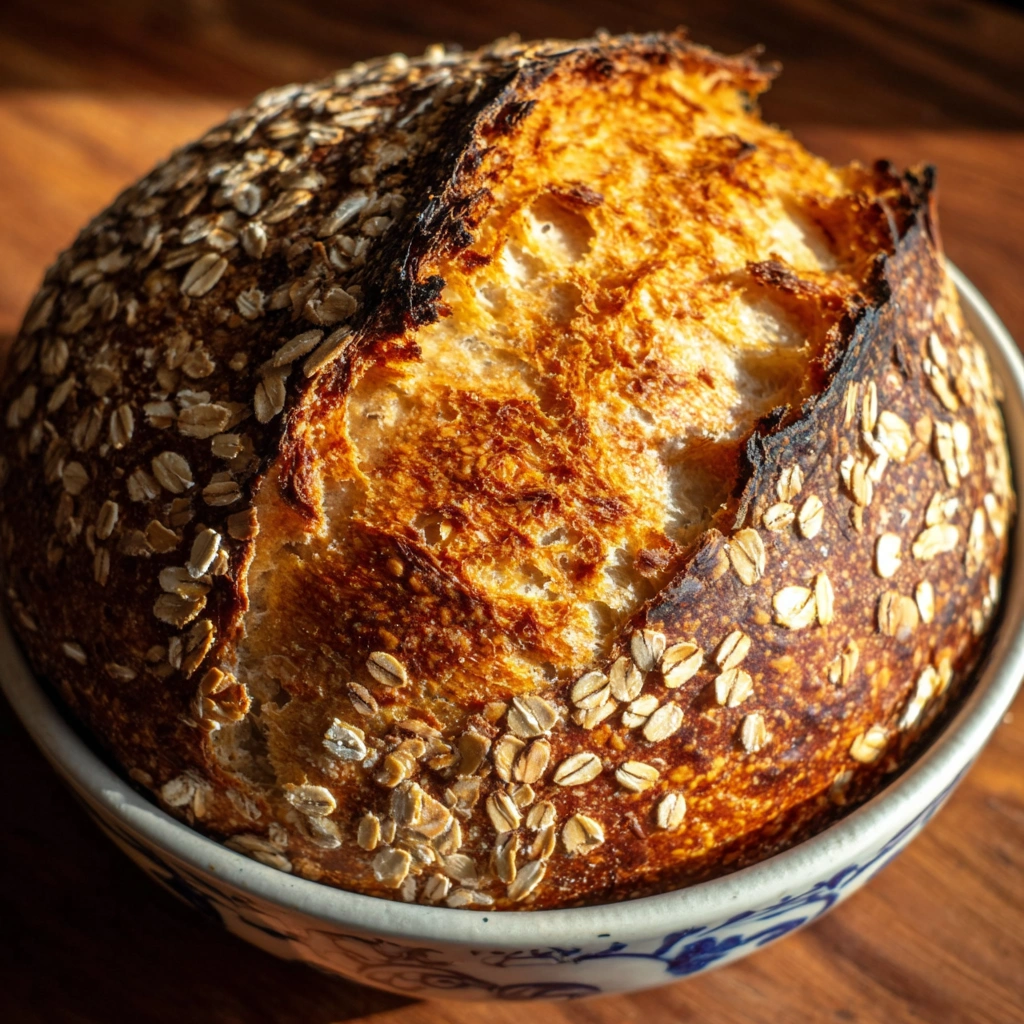
Soft Chewy Honey Oat Bread
Equipment
- 1 large mixing bowl
- 1 banneton or bowl lined with towel for proofing
- 1 Dutch oven or baking stone for baking
- 1 wire rack for cooling
- 1 parchment paper for transferring dough
Ingredients
- 100 g active sourdough starter fed and bubbly
- 100 g water
- 100 g all-purpose flour
- 350 g bread flour
- 100 g old-fashioned oats plus extra for topping
- 10 g salt
- 250 g lukewarm water
- 2 tablespoons honey
Instructions
- Mix the sourdough starter with 100 g water and 100 g all-purpose flour until smooth. Cover and rest at room temperature until bubbly, about 4–6 hours.
- In a large bowl, combine bread flour, oats, and salt. Stir in the levain, lukewarm water, and honey until a shaggy dough forms. Let rest for 20–30 minutes.
- Perform stretch-and-folds on the dough every 20–30 minutes for about 2 hours until it becomes stronger and smoother.
- Cover the dough and allow it to bulk ferment for 3–4 hours until noticeably expanded.
- Turn the dough onto a floured surface, shape into a round boule or bâtard, and place seam-side up in a floured banneton or bowl lined with a towel.
- Proof the dough covered at room temperature for 1–2 hours until slightly puffy, or refrigerate overnight for deeper flavor.
- Preheat oven to 230 °C with a Dutch oven or baking stone inside. Carefully invert the loaf onto parchment, score the top, and place into the hot Dutch oven.
- Bake covered for 20 minutes, then remove the lid and bake 15–20 minutes more until golden and hollow sounding when tapped.
- Cool the bread completely on a wire rack before slicing to set the crumb.
Notes
- Use active, bubbly starter for best rise and flavor.
- Old-fashioned oats add rustic texture; quick oats soften crust.
- Adjust honey ±1 tablespoon to taste for sweetness.
- For steam crust, add hot water or ice tray in oven if baking on a stone.
- Store sliced bread in cloth or breadbox up to 3 days; freeze for longer.
